
Introduction
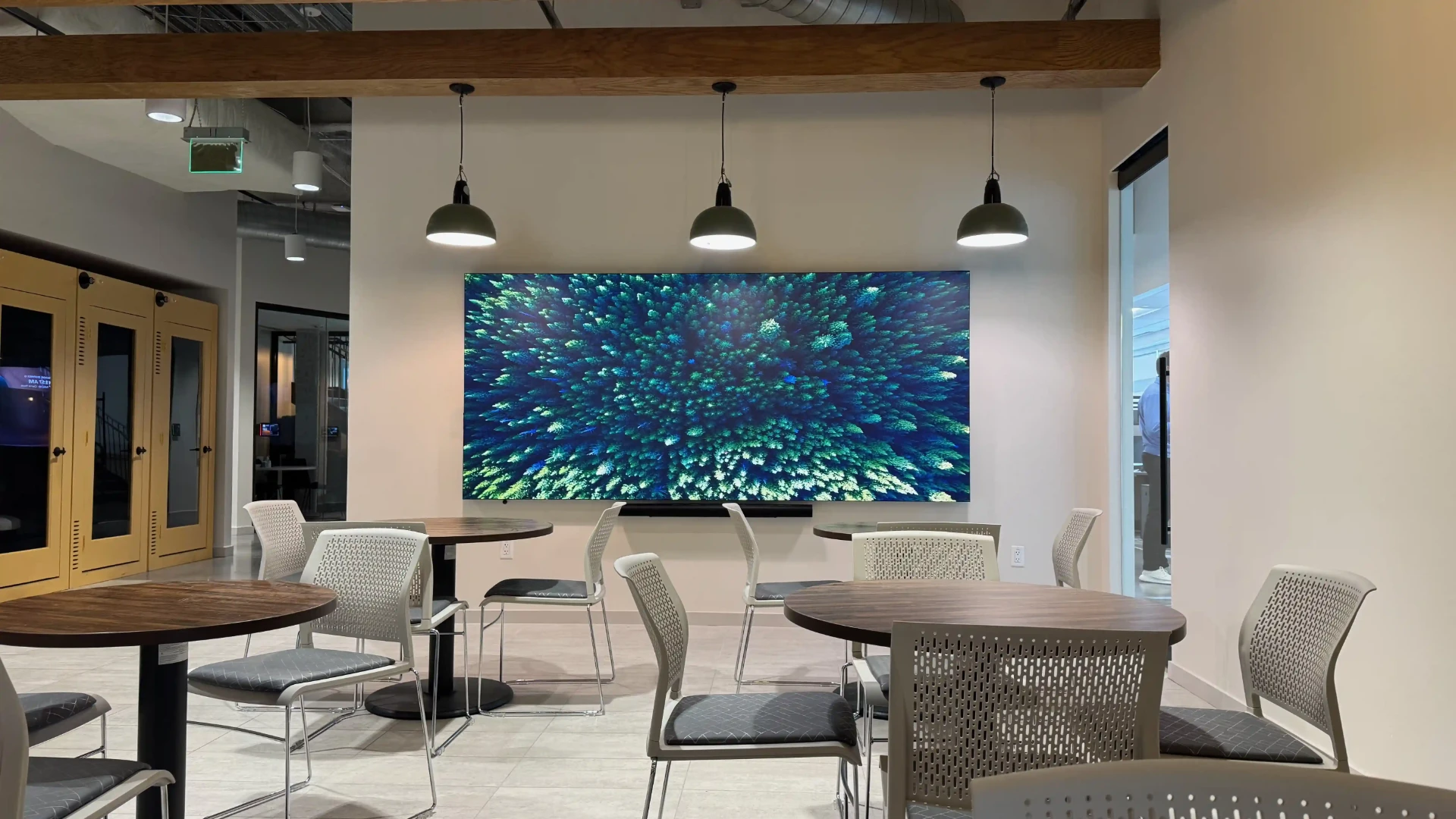
A MicroLED display is a new, advanced screen technology that surpasses traditional LCD and OLED displays with brighter images and richer colors. Furthermore, micro-LED displays consume less energy than older display types and are changing how we watch and use digital screens.
Due to its high cost, mLED is less common than traditional SMD, LCD, or OLED displays. However, as pricing decreases year over year, the popularity and use cases will only increase. Today, you can find MicroLED displays in corporate and high-end showrooms. MicroLED offers a clearer and more realistic viewing experience. This blog explains MicroLED displays and how they work. It also covers their benefits and how they differ from other screens.
| Understanding MicroLED Display Technology
A MicroLED display consists of millions of individual pixels that glow in red, green, or blue. Together, the LED pixels produce their own light and color. Because the display itself does not require a backlight that is used on LCD screens, the image has a higher contrast ratio. Moreover, becuase the display does not use organic materials, it can achieve higher brightness than OLED.
This results in MicroLED being the superior choice when budgets are not constrained.
| How Does a MicroLED Display Work?
In MicroLED displays, tiny red, green, and blue lights combine to produce sharp and bright images. Each light works independently, giving full control over brightness and color.
This control creates deep blacks and bright highlights together. The result is a clear and rich picture that looks more real than normal screens. Additionally, a 1080p MicroLED screen will look better than a 4K one.
| MicroLED vs. OLED: What’s the Difference?
OLED and MicroLED are new display types. Each has its own strengths and weaknesses.
OLED makes light using organic materials. When power passes through each pixel, it glows. The result is true blacks with high contrast. Generally, OLED is more cost-effective than mLED.
MicroLED uses inorganic materials that last longer. MicroLEDs also do not suffer from burn-in. You can use them longer without ghost images. Because colors stay clear and bright over time. Additionally, MicroLED displays can be recalibrated to offset color changes over time.
| Key Features of MicroLED Displays
MicroLED displays have special features that stand out. They offer better quality than other screen types.
Exceptional Brightness and Contrast
Each LED produces its own light. This creates very high brightness. The LEDs can be fully turned off when needed. This makes perfect blacks and a strong contrast.
Long Lifespan
MicroLEDs are built with strong inorganic materials. They often use gallium nitride for durability. This makes them last much longer than OLED screens. They stay bright and clear for many years.
Power Saving Ability
MicroLED screens use energy wisely. They need less power to work well. This makes them perfect for small gadgets. They also fit great in large displays.
No Burn-in Issue
MicroLED screens do not face burn-in problems. They stay clear and bright even after long use. Unlike OLED, the picture does not fade or mark. The quality stays strong over time.
Superior Color Accuracy
MicroLED displays show a wide range of colors. They make pictures look bright and lifelike. Every image appears rich, clear and natural.
| Advantages of MicroLED Displays
MicroLED displays have many benefits that make them better than traditional screens.
- They produce brighter images with realistic colors.
- Each pixel operates independently, producing deep blacks and strong contrast.
- They last longer and don’t experience burn-in.
- They use less power and stay bright even in sunlight.
- Their response time is fast, making them perfect for gaming and videos.
- These displays adjust easily to different screen shapes.
- They are tough against heat and moisture and easy to maintain.
| Challenges in MicroLED Technology
- There are major challenges in building MicroLED displays.
- The process is costly and slows down development.
- Each tiny LED needs precise placement.
- Mass production remains difficult.
- Small defects can affect display quality.
- Repairs are hard due to the LED size.
- High investment limits producers.
- Few suppliers provide the needed materials.
- Balancing brightness and power use is still improving.
| Future of MicroLED Displays
The future of display technology is moving toward MicroLEDs. Many tech companies are working to make them cheaper and easier to produce. These displays may soon power premium TVs, smartphones and AR devices.
MicroLEDs give bright colors, high quality, and a flexible design. They can be built in any shape, which makes them perfect for wearables and new visual experiences.
| Why MicroLED is the Future of Displays?
MicroLED is a new display technology that gives bright and clear pictures. It shows true colors and lasts longer than OLED or LCD.
Each pixel lights itself for deep blacks and perfect contrast. It saves energy and avoids screen burn issues. As production grows, it will become cheaper and used in TVs, phones and other smart devices.
| Conclusion
MicroLED screens bring a new level of display quality. They show brighter pictures and real colors. Each pixel lights itself, which gives perfect contrast and saves energy.
These displays last long and offer high quality. Right now they cost more, but soon they will become affordable and common in TVs and phones.
| FAQs
What materials are used in MicroLED technology?
MicroLED displays use inorganic materials for better light quality. They use GaN for blue LEDs and AlGaInP for red LEDs.
Why is MicroLED considered the future of display technology?
It gives brighter pictures and real colors. It lasts longer and saves more energy than OLED or LCD.
What is the lifespan of a MicroLED display?
A MicroLED display can work for more than 100k hours. Its strong materials make it last for many years.
How long before MicroLED becomes affordable?
As technology grows, MicroLED screens will cost less. They are expected to become affordable in the coming years.
Why are MicroLED displays expensive?
They are expensive to make because each screen needs millions of tiny LEDs. Every LED must be placed perfectly on one panel, which takes time and skill.