
After years of installing LED video walls across the Dallas-Fort Worth/Texas area and beyond, one question keeps coming up from new clients. What's the difference between an outdoor and an indoor LED screen? Without looking too closely, both are large bright displays that show video, motion graphics and static images. However, in terms of hardware, both indoor and outdoor displays couldn't be more different structurally and in design.
At CMG Visuals, we work on both indoor and outdoor projects every week. From corporate boardrooms in Dallas to outdoor church signs across North Texas and beyond, each project has taught us where these two types of walls truly differ. This guide will break down everything you need to know before choosing one for your space, event, or business.
Summary
Indoor LED walls are built for controlled environments, finer detail, and closer viewing. Outdoor LED walls are designed for high brightness, weather resistance, and long viewing distances. Knowing the difference helps you avoid wasted budget, poor performance, and a short product lifespan.
What Is an Indoor LED Wall
An indoor LED wall is designed for use inside controlled spaces such as offices, lobbies, churches, retail stores, broadcast studios, and event venues. These walls focus on producing crisp, high-resolution visuals at close viewing distances.
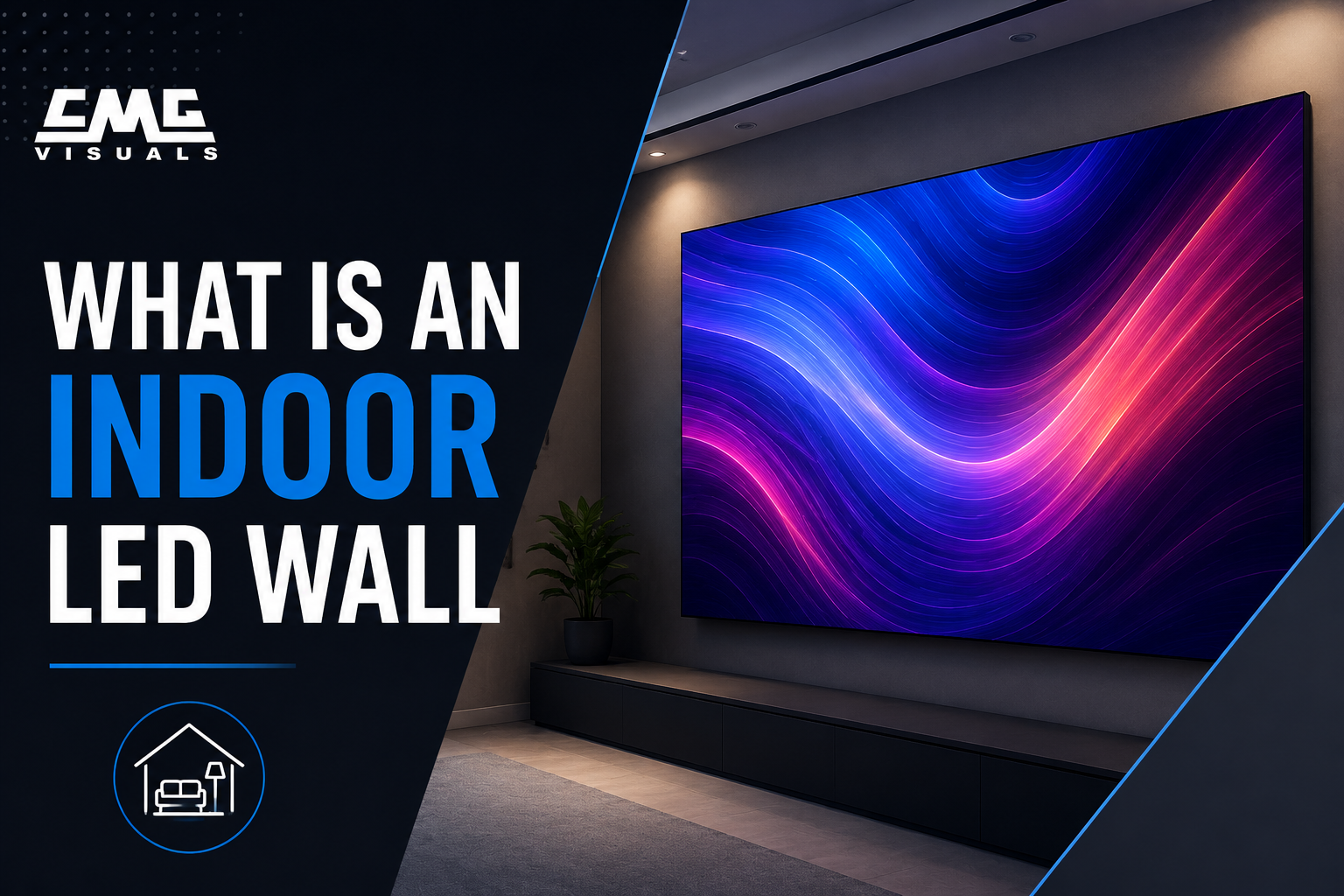
Because indoor environments do not deal with rain, dust, or direct sunlight, indoor screens can use copper wire LEDs, 2-layer PCB boards, while at the same time offering finer pixel pitches. Indoor screens also tend to have a slimmer profile, making them ideal for clean wall mounting or as stage backdrops.
If you want to understand the basics of how these screens work, our guide on what is an LED video wall is a helpful place to start.
What Is an Outdoor LED Wall
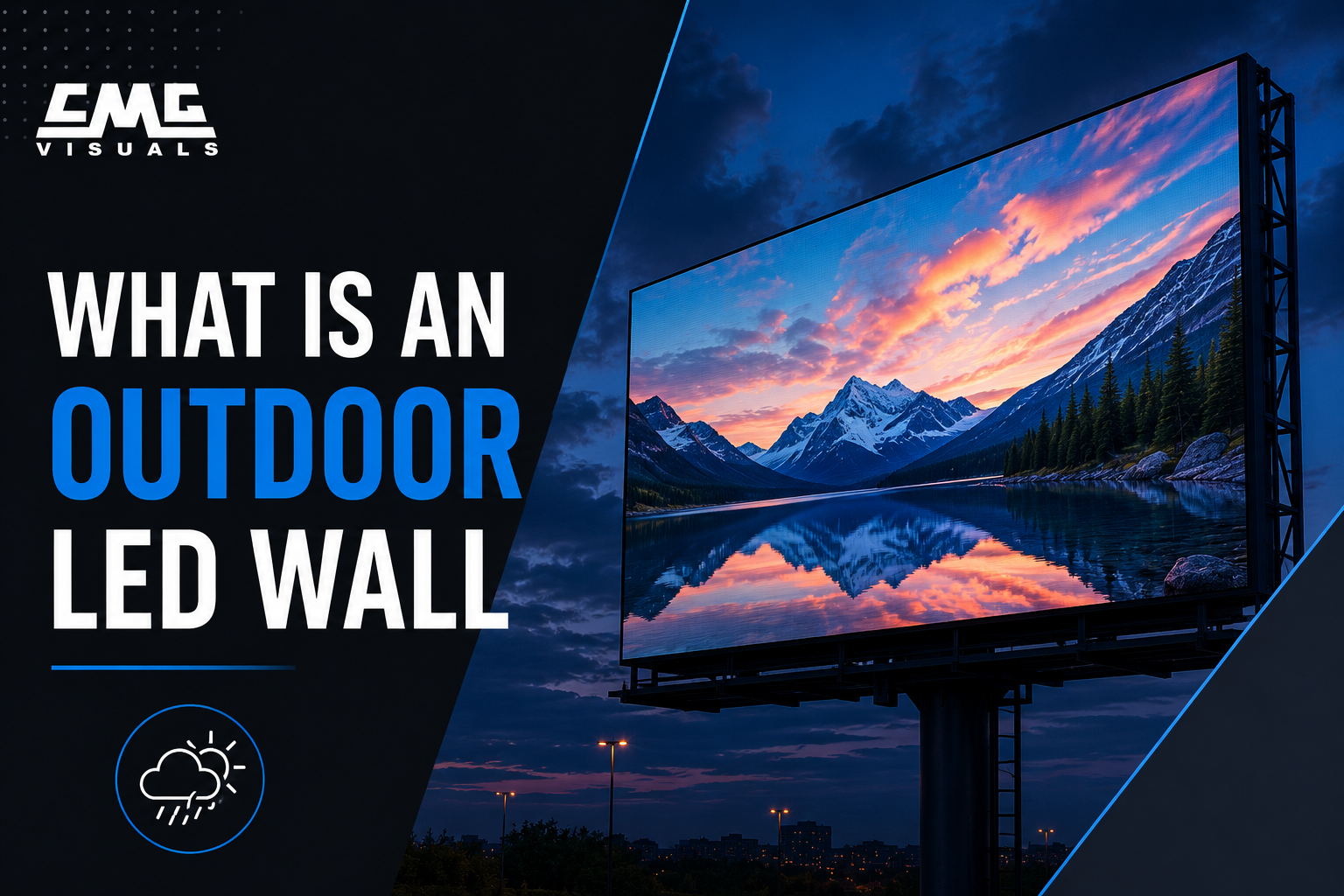
An outdoor LED wall is engineered for the unpredictable. Sun, rain, humidity, dust, vandalism, and temperature swings all attack a screen the moment it is installed outside. To handle this, outdoor walls use weather sealed panels, 4 layer PCB, gold wire LED, weatherproof cable housings, and have a much higher brightness output (6000-15000 Nits).
Outdoor screens are common in stadiums, along the roadside in the form of billboards, church marquees, and outdoor concerts. They are heavier, thicker, and tougher than indoor screens because they must withstand the elements for many years without sacrificing performance and reliability.
Key Differences Between Indoor and Outdoor LED Walls
Here is where most buyers get tripped up. Let us walk through the most important differences we explain to every customer.
Brightness Levels
Brightness is measured in nits. Indoor LED walls usually typically are 600-1000 nits, which is, while outdoor LED walls need anywhere from 5,000 to 10,000 nits to be seen in direct sunlight. Ideally, when purchasing an LED screen, you will want 7500 nits or better, as the screen ages, it will become dimmer and dimmer. So, start high to account for pixel degradation. Black LED has a higher contrast ratio, meaning it can be lower brightness without being as washed out. 3500 nit black LED = 5500 white LED.
Putting an indoor wall outside will result in a washed-out image during the day. Putting an outdoor wall inside will feel uncomfortably bright and will waste energy. Additionally, simply turning down the brightness of an outdoor LED screen indoors will result in terrible color effects, as the screen was originally calibrated at a higher brightness.
Tip: If buying an indoor/outdoor rental screen, it's best to have two receiving card files written at the time of calibration, one for indoor and one for outdoor.
Pixel Pitch and Resolution
Pixel pitch is the distance between LED pixels. Indoor walls typically use a smaller pixel pitch, such as P1.2, P1.5, or P1.9, because viewers stand closer to the screen. Outdoor walls use larger pixel pitches like P3.9, P5, or even P10 since viewers are much farther away.
We dive deeper into this topic in our blog on what pixel pitch is and why it matters for your business. Choosing the wrong pixel pitch is one of the most common mistakes we see in failed installations.
Weather Protection and IP Rating
Outdoor LED walls carry a high IP rating such as IP65 or IP67 on both the front and back. This protects them from rain, dust, and humidity. Indoor walls usually have a low IP rating, often IP30, because they do not need that level of sealing. Most COB or GOB indoor is IP65 on the front as the pixels are encapsulated.
If an indoor wall ever gets exposed to water, even a single rainstorm, the damage is often permanent.
Build Quality and Durability
Outdoor panels are heavier because they use die-cast aluminum cabinets, sealed connectors, and thicker protective layers. Indoor panels prioritize a slim, lightweight design that makes installation cleaner and easier.
This is why outdoor screens generally cost more per square foot. The engineering required to handle Texas weather is significantly more advanced than that found on indoor panels.
Power Consumption
Because outdoor screens push out much higher brightness, they consume more electricity. Many of our outdoor clients plan power infrastructure carefully before installation. Indoor walls are much more energy efficient, especially the newer COB based panels. Consumption can be almost half for indoor.
If you want to learn about the latest in LED chip technology, check out our comparison of COB vs SMD screens.
Maintenance Approach
Indoor walls usually allow front service or rear service, depending on the installation location. Outdoor walls almost always require rear service access because the front is sealed for waterproofing. This affects how the screen needs to be mounted from day one.
Our LED service and repair team handles both kinds across many states.
Cost Comparison
Outdoor LED walls cost more than indoor walls of the same size. Higher brightness, weatherproofing, and stronger materials all add to the price. Indoor walls can be more affordable, but adding a fine pixel pitch will also raise the cost.
For a deeper breakdown of pricing, see our blog on how to budget for LED video wall installation.
How to Choose the Right LED Wall for Your Project
The right choice always starts with three simple questions. Where will the wall live? How far will the audience be? And what type of content will play on it.
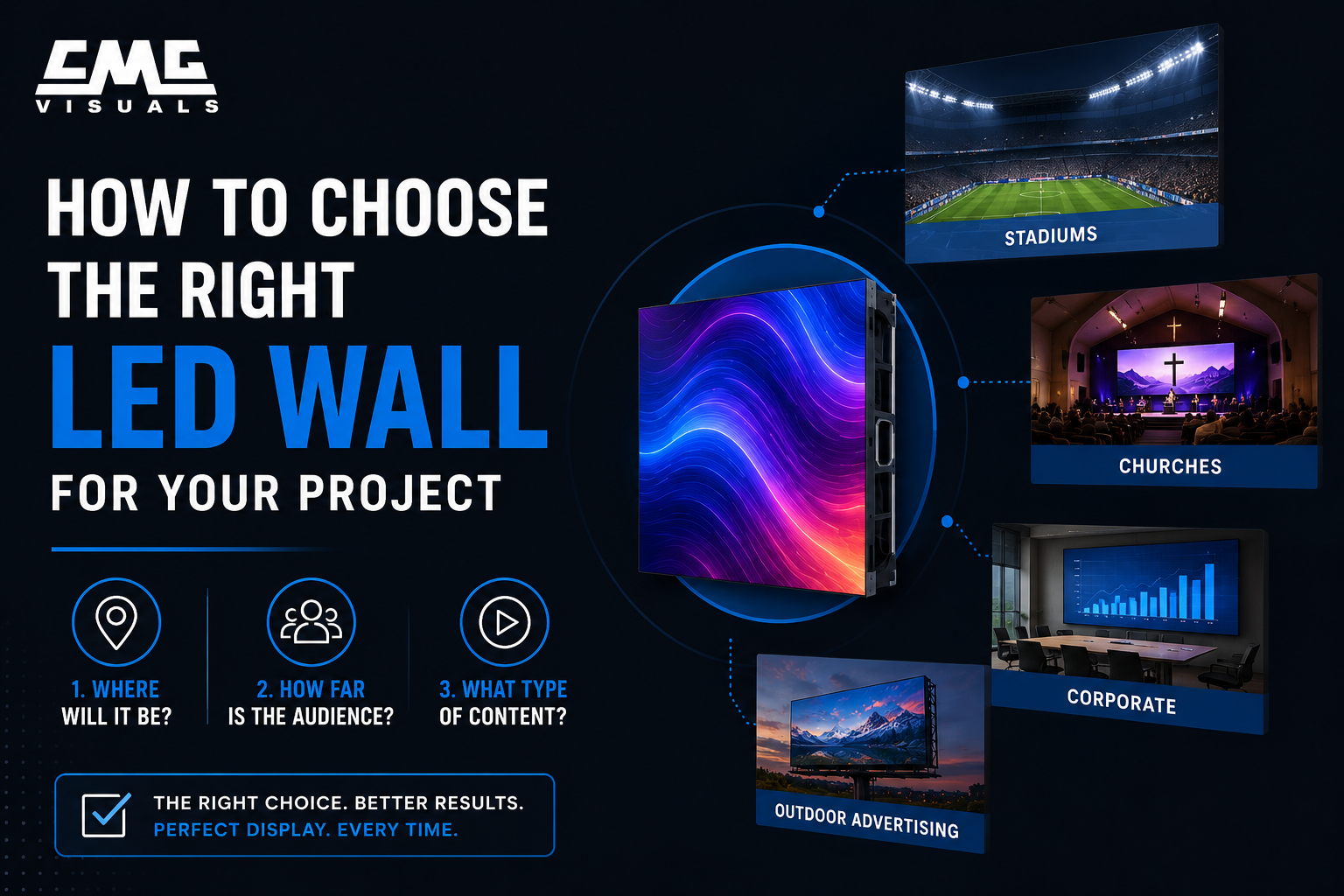
If the screen is going inside a church, lobby, conference room, retail showroom, or studio, an indoor wall is the answer. If the screen is going outside a stadium, covered restaurant patio, drive-thru, or building facade, you need an outdoor rated wall.
For events that move between both environments, our LED screen rental service offers both indoor rental options and outdoor rental options, depending on the venue.
Real Projects We Have Worked On
We recently installed a 0.9mm fine pixel pitch indoor LED wall for a corporate client in Long Island, New York. The image quality at close range was stunning, and the room lighting was perfectly balanced for it.
On the other side, we replaced an outdoor digital LED sign for St. Luke's Church in North Dallas. That project needed a much brighter screen and a full weatherproof build to withstand Texas weather year-round.
Both projects worked perfectly. However, if we had swapped the screens, both would have failed within weeks. That is the real cost of picking the wrong type of wall.
Conclusion
Indoor and outdoor LED walls may look similar from a distance, but they are two very different products built for two very different jobs. Brightness, pixel pitch, weather protection, and durability all vary depending on where the screen will be used. Choosing the right one upfront protects your investment and gives your audience the best possible viewing experience.
At CMG Visuals, we help businesses, churches, event planners, and production teams choose the right LED wall every day. Whether you need a sale, installation, repair, or rental, our team is ready to guide you to the right solution. Reach out through our contact page and we will help you find the perfect fit for your space.
Frequently Asked Questions
1. Can I use an outdoor LED wall inside?
Technically yes, but it is not recommended. Outdoor walls are too bright, too heavy, and too expensive to use indoors. They also consume far more power than necessary for a controlled indoor space.
2. How long does an outdoor LED wall last?
A quality outdoor LED wall lasts between 50,000 and 100,000 hours before brightness drops to half. With proper maintenance, that translates to many years of reliable daily operation.
3. Are outdoor LED walls safe in heavy rain?
Yes, when they carry the right IP rating, such as IP65 or higher. These walls are sealed to handle rain, dust, and humidity. However, professional installation is critical to keep moisture from sneaking in around cabling and mounts.
4. What is the cheapest way to get an LED wall for an event?
Renting is almost always more affordable than buying for one-time events. Our rental options include indoor, outdoor, and specialty configurations. You can learn more in our blog on how much it costs to rent an LED video wall screen.